| The opinions below are
the result of 35 years of teaching,
eight years as a vice president of a
teacher's union and one year as
president of a student education
organization while in college.
|
| Education is on the
brink of either being a source of
enlightenment with enhanced methods of
teaching students to think, make
rational decisions and increased their
understanding of our history
society, nation and the world we
live in today. However it is also
facing those who would completely
privative it and have teachers
limit their methods of teaching by, indoctrination them in narrow
bigoted, outdated and opinions. Thus create individuals who will
blindly follow and utilize ideas
that would only damage
our society, nation and world. |
|
Here are some
recommendations |
| Fund the system so the
schools can fulfill the needs of the
administration, teachers, parents
and students. |
| Encourage the teachers
teach and respect their work as long
as it is nonthreatening, factual,
and based on proven methods. |
| Encourage students to
think, study and grow educationally,
physically and mentally. |
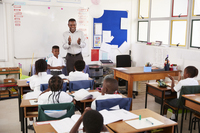
| Give the the teacher's
support and the tools to do their
jobs with adequate space, computers,
white boards, desks, writing
utensils, paper, black boards, and
emergency notifications equipment. |
| Never ever criticize a
teacher in front of others
especially in front of students,
parents and other personal. If there
are issues to be addressed do it
professionally and in private. |
| If situations such as
illness, family emergencies or
personal issues give the teacher
latitude and time to resolve the
issue. |
| Restrict the use of cell
phones and other personal electronic
devices by the students. Schools
should be a place of enlightenment
and learning not a
place of socialization. |
| If artificial
intelligence becomes a factor
utilize it not as a replacement for
a teacher or other personal but as a
resources and enhancement of the
school and subject matter. |
| Never use drones and
robots as a replacement for any
personal. Keep the system human
based. |
| Don't hire teachers
because they are coaches of a
particular sport. Hire a couch for
their specialties and teachers
because the subject matter is their
specialty. Rarely in my experience
did I see a coach-teacher provide
the quality of material required by
the subject matter. |
| Keep class size small.
Large classes will divert the
attention of the teacher and cause
issues with contol. |
| Hire and administrators
that are experienced well trained
and understanding of the needs of
the teacher, students and parents.
The
Peters Principle* should never
ever be factor. |
| Bare in mind the status
, background and situation when
students misbehave, make the
punishment and resolution fit the
situation. |
| "Education is the
passport to the future, for tomorrow
belongs to those who prepare for it
today" Malcom X |
| *"The Peter
principle is
a concept in management developed
by Laurence
J. Peter which
observes that people in a hierarchy tend
to rise to "a level of respective
incompetence": employees are
promoted based on their success in
previous jobs until they reach a
level at which they are no longer competent,
as skills in one job do not
necessarily translate to another" |